lauantai 26. tammikuuta 2013

  La  Tagua

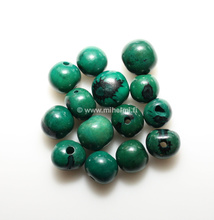
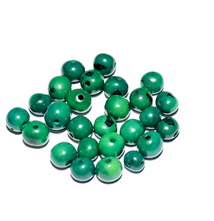
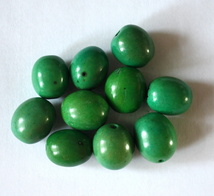
La tagua, también conocida como nuez de marfil o marfil vegetal, es la semilla de la palma phytelephas macrocarpa, que crece en los bosques húmedos tropicales de la región del  pacífico. Se utiliza y se comercializa internacionalmente, principalmente para hacer botones y también figuras artísticas o decorativas y adornos.
La tagua o marfil vegetal se obtiene del endosperma blanco y duro, de las semillas de la palmera phytelephas sp, de la familia . La especie se distribuye en el noroeste de Sur América. El endosperma pulido de la semilla se parece muchísimo al  marfil.
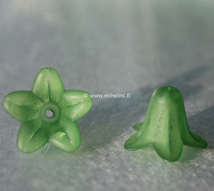
Y ustedes queridas amigas que esperan para usar  nuestros lindos collares de tagua  o quizas deseas hacerlo tu misma en nuestra tiendita virtual encontraras todo lo que necesitas bienvenidos(as) a nuestra  tienda virtual www.mihelmi.fi
fuente wikipedia 


The tagua

Tagua is a form of vegetable ivory harvested from ivory palms in South America. It is viewed as a sustainable alternative to ivory derived from animals, and responsible cultivation and harvesting of tagua may also help with rain forest conservation in South America. Like true ivory, tagua is dense and creamy yellow in color, and it can be carved and worked into buttons, traditional handcrafts , billiard balls, musical instrument parts, and other things traditionally made from ivory.
The formal name for the South American ivory palm is Phytelephas aequatorialis,  A full-grown tagua tree can reach 65 feet (20 meters) in height, and will yield several very large, knobbly wooden fruits. When the fruit is cracked open, it reveals several hen's egg sized tagua nuts, the seeds of the tree. The tagua seeds can be allowed to grow into seedlings to perpetuate the trees, or carved into vegetable ivory products. In small South American communities, tagua can provide a valuable economic and cultural service by providing people with a source of income which allows them to live traditional lifestyles.
Fuente wisegeek 
www.mihrelmi.fi


www.mihelmi.fi ; )

tiistai 18. syyskuuta 2012

Pantone muoti väri raportti syksyllä 2012

 Aca  les presentamos  los colores de moda para este otoño 2012 según Pantone : )


sunnuntai 24. kesäkuuta 2012

Huayruro

Son muchos los países que cuentan con culturas ancestrales y milenarias, que contienen mucha simbología y elementos con poderes, como los  amuletos, talismanes o ritos de magia.
Y mi País no es la excepción. El perú  está lleno de elementos místicos y mitos que contienen, algunas veces, mucho de cierto en ellos, como el  mito de los huayruros que proviene de una antigua leyenda Inca…
“Los huayruros colgaban del cuello de una hermosa dama en forma de collar. Esta dama sería entregada de manera obligatoria al Inca Túpac Yupanqui para que se convierta en su esposa. Sin embargo, ella amaba a otro hombre.
Al intentar escapar tras el amor de su vida, el Inca ordena su captura y su amado muere tratando de defenderla. La bella mujer es condenada a muerte, pero la acepta feliz, porque sabe que se encontrará con el hombre que ama en el más allá.”
Esta leyenda manifiesta que la persona que portó el collar de huayruros tuvo mucha suerte, fortuna y amor; se sabe que murió, pero esto le traería mucha dicha y suerte cuando se volviera a encontrar con su amado.

Los huayruros son pequeñas semillas de colores negro y rojo intenso, cada color en una de las mitades de la semilla. Estas semillas se encuentran dentro de una vainas que crecen de un árbol muy alto.
Estas semillas tienen una hembra y un macho que deben ser juntadas para poder hacer que crezca el árbol. Estas semillas difieren de las anteriores en que son de un tamaño más grande.
La hembra es de un color rojo intenso que cubre toda la semilla, mientras que el macho es de color rojo con una pequeña mancha negra en la superficie; de esta manera podemos identificarlos.
Se dice que cargar huayruros en una bolsita dentro de la cartera nos puede traer mucha fortuna. También podemos llevarlos en forma de collares o aretes, ya que su utilización en bisutería está cada vez más arraigada en el mundo.
También es una semilla que nos da mucha suerte y amor. A los bebitos se les suele colocar una tobillera de huayruros para potegerlos contra elmal de ojo. yo por mi parte tengo varias piezas de bisuteria hechas de huayruro ; )

Many countries with ancient cultures,  which contain much symbolism and power elements, such as amulets, talismans or magic rites.
And my country is no exception. Peru is full of myths and mystical elements that contain sometimes a lot of truth in them, like the myth of the huayruros that comes from an ancient Inca legend ...
"The huayruros neck hung a beautiful lady in the form of necklace. This lady would be delivered on a compulsory basis the Inca Tupac Yupanqui to become his wife. However, she loved another man.
When trying to escape after the love of his life, the Inca ordered his arrest and his beloved dies trying to defend it. The beautiful woman is sentenced to death, but happily accepted, knowing that you will find the man she loves in the afterlife. "
This legend states that the person who carried the necklace huayruros had much luck, fortune and love, and this would bring much joy and luck when he returned to find her beloved.

The seeds are small huayruros black and deep red colors, each color in one half of the seed. These seeds are inside a pod that grow from a very tall tree.
These seeds have a female and a male to be coupled to make the tree grow. These seeds differ from previous ones in that are one size larger.
The female is bright red that covers the seed, while the male is red with a small black spot on the surface so we can identify them.
It is said to carry in a bag huayruros within the portfolio we can bring great fortune. We can also take them into necklaces or earrings, as its use in jewelery is increasingly rooted in the world.
It is also a seed that gives us good luck and love. For the babies are usually placed in a brace for protect against the evil eye. I for my part I have several pieces of jewelry made of huayruro ;)

Osadia kaulakoru

Tuotenumero: 660
Valmistettu suomessa

Huayruro" Hembra"

Huayruro "Pieni Macho"


Huayruro" Macho"


Fuentes: Geo mundo,Nos Casamos